

What Is a Legionella Risk Assessment? A UK Guide for Duty Holders
Under the Health and Safety at Work etc. Act 1974 and associated regulations, duty holders have a responsibility to manage the risks associated with Legionella bacteria that may arise from workplace activities. The Management of Health and Safety at Work Regulations and the Control of Substances Hazardous to Health (COSHH) Regulations 2002 provide the framework for assessing and controlling these risks.
If you manage a building, oversee facilities, or hold responsibility for health and safety, a Legionella risk assessment is a crucial part of ensuring your water systems remain safe and compliant.
Guidance issued by the Health and Safety Executive (HSE) requires duty holders to assess and manage the risks associated with Legionella bacteria in water systems. Understanding what a Legionella risk assessment involves can help organisations protect building occupants, meet legal obligations, and maintain effective water hygiene standards.
What Is Legionella and Why Is It Dangerous?
Legionella is a naturally occurring bacterium that can grow in man-made water systems when conditions allow. It is most commonly found in systems where water is stored, recirculated, or maintained at temperatures that encourage bacterial growth.
When contaminated water droplets become airborne and are inhaled, exposure can lead to Legionnaires’ disease, a serious and potentially fatal form of pneumonia.
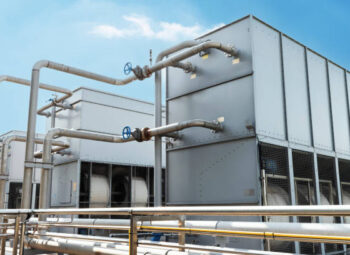
Common locations where Legionella risks may arise include cold water storage tanks, hot and cold water distribution systems, showers, calorifiers, water heaters, cooling towers, and associated plant equipment.
What Is a Legionella Risk Assessment?
A Legionella risk assessment is a detailed, site-specific evaluation of a building’s water systems, associated equipment, and existing control measures.
The purpose of the assessment is to identify potential sources of Legionella growth, determine who may be at risk, evaluate how effectively the system is being managed, and recommend any actions required to reduce risk.
For organisations that operate water systems or cooling towers, having a suitable and sufficient Legionella risk assessment is a legal requirement.
What Does a Legionella Risk Assessment Involve?
A professional Legionella risk assessment typically combines a physical inspection of the water systems with a review of the management procedures already in place.
During the site inspection, the assessor will examine the condition and configuration of cooling towers, tanks, heaters, pipework, outlets, and associated plant equipment. They will identify factors that may increase risk, such as scale build-up, corrosion, debris accumulation, dead legs, and low-use outlets.
Alongside the physical survey, the assessor will review how the water system is being managed. This may include maintenance schedules, temperature monitoring records, cleaning and disinfection history, water treatment strategies and performance data, water sampling programmes where appropriate, and the allocation of responsibilities for water hygiene management.
Following the assessment, a comprehensive report is produced. This document identifies any risks present, outlines existing control measures, and provides prioritised recommendations for improvement. The report forms the foundation of an ongoing Legionella control programme.
Who Needs a Legionella Risk Assessment?
Any organisation that controls premises with water systems or cooling towers should have a Legionella risk assessment in place.
This includes offices, schools, universities, healthcare facilities, hotels, leisure venues, residential buildings, industrial sites, and public sector properties. In practice, if a building contains a water system capable of supporting bacterial growth, a Legionella risk assessment is usually required.
When Should a Legionella Risk Assessment Be Reviewed?
A Legionella risk assessment is not a one-off exercise. It should be reviewed whenever significant changes occur that could affect the level of risk.
Examples include:
- Changes to the water system or its operation
- Changes to the use or occupancy of the building
- New information becoming available regarding risks or control measures
- Monitoring results indicating that existing controls are no longer effective
- Changes to key personnel with responsibility for water hygiene
- A case of Legionnaires’ disease or legionellosis associated with the system
Even where no major changes have occurred, periodic reviews should be undertaken to ensure the assessment remains accurate and relevant. The frequency of review should be determined by the level of risk identified.
Why a Site-Specific Assessment Matters
No two buildings or water systems are exactly alike. Even properties that appear similar can present very different Legionella risks due to variations in system design, usage patterns, maintenance practices, and asset condition.
A site-specific assessment provides a realistic understanding of the risks present, allowing organisations to implement appropriate control measures based on evidence rather than assumptions.
What Happens After the Assessment?
Completing the assessment is only the first stage of effective Legionella management.
Depending on the findings, organisations may need to update monitoring and treatment procedures, remove redundant pipework, improve access for maintenance and inspections, clean and disinfect water storage tanks, optimise temperature control measures, or undertake remedial works.
Ongoing monitoring, maintenance, and periodic review are essential for maintaining compliance and keeping risks under control.
Choosing the Right Support for Legionella Control
When organisations commission a Legionella risk assessment, they are often looking for a provider that can also support any practical work identified during the process.
4i Water Services Ltd supports organisations across the UK with a comprehensive range of water hygiene and water treatment services. As an independent company that operates without subcontractors, 4i Water Services Ltd delivers responsive, service-led support tailored to the requirements of each site.
For organisations managing multiple buildings or complex estates, access to both assessment services and ongoing water hygiene support can help ensure maintenance programmes remain effective, compliant, and easy to manage.
Final Thoughts
A Legionella risk assessment is a fundamental component of responsible building and asset management. It enables duty holders to understand their water systems, identify potential risks, and implement appropriate control measures to protect building users.
More than simply a regulatory requirement, a well-executed assessment provides the foundation for a safe, compliant, and effectively managed water hygiene programme.
If you require support with a Legionella risk assessment or wider water hygiene and water treatment services, contact 4i Water Services Ltd. Our team works with organisations throughout the UK, providing practical support for Legionella control, monitoring, testing, water hygiene management, water treatment, and remedial works.